The Story of Killer Rabbits & Village Feuds
I'm delighted to be joining Robert Birming's AuguStory challenge, where bloggers are sharing the stories behind their blogs, how they got started, and where blogging has taken them.
And the funny thing is, Killer Rabbits & Village Feuds wasn't really the blog I set out to create.
I'm just very good at falling down rabbit holes.
It Usually Starts With a Picture
I've always loved history, particularly the bits that make you stop and think, wait... they actually did that?
I love visiting castles — the more ruined, the better. Standing among broken walls, I find myself wondering who lived there, what they did all day, what they ate, what they argued about, and what the place looked like when it was full of people rather than tourists.
But it wasn't really castles that started Life in the Middle Ages.
It was pictures.
I started spending ridiculous amounts of time looking through medieval manuscripts. Not just the famous paintings of kings and saints, but the little scenes tucked into the margins and pages.
A man having a tooth pulled.
A baker at work.
Someone being chased through the streets.
A woman defending a castle with a sword.
A swarm of ants marching towards a field.
And suddenly there's a story.
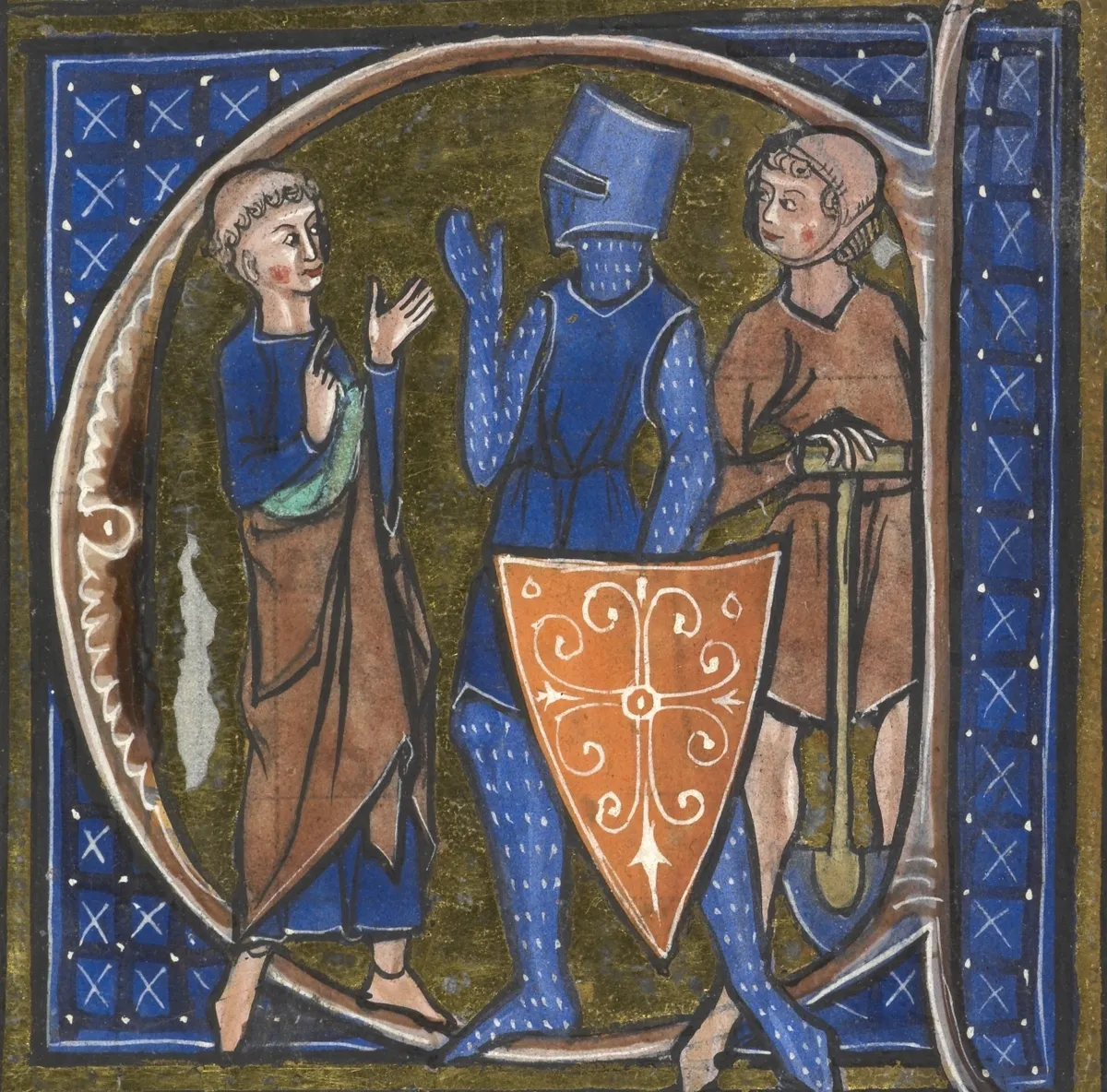
That's what I find myself doing now: looking at something that was painted or written hundreds of years ago and asking, what's the story here?
Sometimes the answer is ordinary. Sometimes it's surprisingly funny. And sometimes it's so strange that you have to check the source three times because surely nobody actually did that.
They usually did.
The Bits Between the Big Stories
The more I looked, the less interested I became in kings and battles.
I wanted to know about everyone else.
The farmers. The bakers. The villagers. The women running households. The people appearing in the margins of manuscripts without anyone ever bothering to tell us their names.
More recently, I've fallen down another particularly dangerous rabbit hole: medieval manor court rolls.
I can now happily spend an evening reading seven-hundred-year-old records about wandering pigs, blocked ditches and neighbours arguing over fences.
And somehow, those tiny disputes feel incredibly alive.
Someone owned that field.
Someone else's cow got into it.
Someone was furious.
Someone went to court.
Seven hundred years later, we're still reading about it.
That's the part of medieval history I love most.
Not the grand story. The little one.
And Then There Was Middle Woe
Eventually I started wondering what would happen if I stopped simply writing about medieval people and invented some of my own.
That became Middle Woe — a fictional medieval village inspired by the real world I've been disappearing into.
There are parish notices. Court disputes. Village gossip. Bureaucracy. And, inevitably, people taking completely ordinary problems far too seriously.
It's fictional, but almost everything in it has roots in something I've found in the historical record.
Finding My Place to Write It
I've blogged on just about every platform imaginable over the years — WordPress, Blogger, Medium, Tumblr, Substack and probably several others I've forgotten.
I've bought domain names that seemed like excellent ideas at the time and abandoned projects when my attention wandered somewhere else.
Then I found Bear Blog.
And something clicked.
It's simple. I can write. I can play with the HTML and CSS. I can change things when I have an idea rather than spending half my life trying to make a theme behave.
More importantly, it feels like my little corner of the internet.
So What's Next?
I don't really know.
And, for once, I'm quite happy about that.
Because I don't have a carefully planned five-year content strategy.
I have a folder full of manuscript images, a growing collection of medieval court cases, far too many open browser tabs and a long list of things that have made me say, surely that's not true?
And that's probably enough.
Because there's always another picture.
Another strange little record.
Another forgotten person.
Another story waiting somewhere in the margins.
All I have to do is find it.